OPINION
March 1, 2012
Ryan's Medicare Revolution
With little fanfare, the Wisconsin Republican congressman has
persuaded presidential candidates and even some Democrats.
By FRED
BARNES
Over the past year, an entitlement revolution has taken place on Capitol
Hill. It has gotten relatively little attention from the media. Yet its
implications for the budget deficit and the health care of senior citizens are
enormous.
The revolution involves Medicare, the health-care program for the elderly and
the single biggest cause of America's looming debt crisis. Reform of Medicare
would be achieved by a policy known as "premium support." It would bring
consumer choice and spending restraint to the beleaguered program.
You may not have heard of premium support. But thanks to the efforts of Paul
Ryan, the Republican chairman of the House Budget Committee, it is now the
leading alternative to current, fee-for-service Medicare. Indeed, it is the only
credible alternative.
How would premium support work? Beginning in 2022, it would create a
marketplace in which seniors have a fixed amount of money to buy health
insurance. The amount of "support" would match the price of the insurance
"premium." The poor would get additional support to offset out-of-pocket
expenses. The better-off would get less. Payments would be "risk-adjusted" so
the sick would be assured of full coverage.
Yes, it's a bit complicated. Insurers would compete for the business of
seniors. There would be three options. One would be coverage at the support
level. Another would offer less coverage at a lower price, with the difference
rebated to the beneficiary. The third would provide broader coverage at a higher
price, requiring the beneficiary to pay the amount above the support
level.
That's the health-care part of premium support. The cost-saving part is
simpler. Medicare in its current form is open-ended, its expenditures
uncontrolled and unsustainable. With premium support, the cost of Medicare would
be capped. Its payment would rise with the rate of inflation or GDP growth, or
slightly above.
The salience of premium support doesn't depend on who wins the White House in
November. It is bound to be a major part of budget negotiations. Without it,
serious deficit reduction would be almost impossible. With it, a debt crisis
like Europe faces today is avoidable.
True, Mr. Obama's health-care law has created an Independent Payment Advisory
Board with the task of limiting Medicare spending, now rising at 6% a year, to
the economic growth rate plus a half percentage point. Not only does the board
lack the tools to achieve this, but even if it did, the cuts would drive away
doctors by the thousands and force hospitals to close due to lack of
funds.
How Mr. Ryan, a protégé of the late Republican reformer Jack Kemp, yanked
premium support from obscurity is an amazing story. Discussed in policy circles
for years, it was recommended by a bipartisan presidential commission in 1999.
President Clinton ignored the advice, and President George W. Bush never
embraced it.
It didn't get traction in Washington until last year, when Mr. Ryan drafted a
budget for 2012 and included premium support. The Ryan budget passed the House
before dying in the Democratic Senate, which refused to pass any budget.
But House passage alone was a milestone. When Mr. Ryan first proposed premium
support in 2008, 14 House Republicans signed on as co-sponsors. But when his
budget cleared the House in 2011—with Medicare reform its most controversial
provision—only four of the 241 Republicans voted against it. Of the 87 GOP
freshmen, only one voted no. In the Senate, all but five of the 47 Republicans
declined to back Mr. Ryan's plan.
The story might have ended there. It's one thing for the congressional party
to back premium support, another for the presidential wing to do so. Mr. Ryan
personally talked to Rick Santorum, Mitt Romney and Newt Gingrich. He proved to
be persuasive. (Mr. Gingrich retracted his charge that Mr. Ryan's plan was
"right-wing social engineering.") Ron Paul hasn't taken a position on the
policy.
The result? Premium support is now Republican orthodoxy. But absent a GOP
landslide this fall, that's not sufficient to win congressional approval.
Besides, entitlements are best enacted on a bipartisan basis. Otherwise, they
may wind up like ObamaCare—unpopular, under legal challenge, and the target of
endless partisan attacks.
Mr. Ryan understood the need for Democratic allies. So when Democratic Sen.
Ron Wyden of Oregon approached him last fall, Mr. Ryan readily agreed to
compromise. Mr. Wyden wanted traditional Medicare to be an option under premium
support, a provision urged by Democratic budget expert Alice Rivlin. He got it,
though payments would be capped, not open-ended.
Democrats had pounced when Mr. Ryan put Medicare reform in the House budget.
They insisted Republicans would end "Medicare as we know it." The charge lost
some of its sting after GOP candidates brushed the accusation aside and won
special House elections last year in Nevada and New York. Democrats chastised
Mr. Wyden, if merely to discourage other Democrats from joining Mr. Ryan. It
worked—in the short run.
The embargo on premium support won't last past the November election. Mr.
Ryan says he's talked to a "handful" of Democrats in the House and Senate who
favor Medicare reform. "They're afraid of getting treated like Ron Wyden," Mr.
Ryan says. "They're not willing to talk [publicly] until after the
election."
John Gorman, a consultant who worked on health issues in the Clinton
administration, says the "only thing that's going to save this program is
structural reform." The Wyden-Ryan bill is "a reasonable compromise," he says,
and "there's a lot of precedent for it." One is the Medicare prescription drug
program, passed in 2003, under which commercial providers compete for the
business of seniors. As a result, its cost to the taxpayers is 41% less than
projected. Another is Medicare Advantage, selected by 20% of seniors. "The
beneficiaries are happy," Mr. Gorman says.
Advocates of a single-payer health-care system are not happy. They like
Medicare the way it is, a defined-benefit plan with no lid on costs and the
government in full control. "Their vision of health care is the way Medicare is
run today," says health-finance expert James Capretta. It points the way to a
single-payer system.
Premium support doesn't. It is a defined-contribution plan, forcing insurers
to be more efficient while making their product as attractive as possible. "It's
the only way of saving Medicare without subjecting it to harsh rationing," Mr.
Ryan says.
Mr. Ryan says the arrival of the large freshman class of House Republicans
accelerated the drive for Medicare reform. But it's Mr. Ryan, 42, who deserves
the bulk of the credit. He's the top Republican thinker on domestic issues. And
he has a keen political sense. He's been on a roll since he took apart ObamaCare
in front of Mr. Obama at the White House health-care summit in 2010.
Because of his tireless proselytizing, premium support has emerged as the
most sensible way to reform Medicare.
Mr. Barnes is executive editor of the Weekly Standard and a commentator
on Fox News Channel.
Follow us on Twitter @Gadsden_Group

And tell your friends too!!!
If you understand Alinsky, you understand Leftists

Obama was an Alinsky trainer at ACORN
About Us

- Wisconsin Republican Dad
- WRD: I'm just a dad and husband who's very worried about the direction this country is going, and decided it was time I got involved. I believe in fiscal restraint, personal responsibility, a much smaller goverment, fewer government programs, agencies, and entitlements, strong national defense, and justice for criminals. I want our borders strengthened, tort reform, a balanced budget, and deficit reduction. I believe in Constructionist judges, not liberals who legislate from the bench. I'm pro gun, I'm for expanding nuclear power and offshore drilling. By default, that makes me a conservative Republican. The liberals are killing this country, and worse, they know it. Their desire to be liked, to be seen as champions of the poor, while they continue to grow the welfare state, bothers me greatly. Because arrogance is the worst of human traits, their condescension (that means you Russ Feingold) towards middle America makes me want to scream. So I am... Gadsden Group: We are a group of like-minded individuals based in Waukesha and Milwaukee counties (WI). We're sick of liberals running our state into the ground, so we decided to make a stand. So far, so good...
Very, very true...

Liberal tears....

"I also am a total loser"
We won! Again!!!

3 victories in 4 year, this is uncharted water. Take that you lefties!!!!
This says it all perfectly

wish I had thought of this one!
Leftists...

Differences

Please, can you help us find a cure?

Send your donation to the Trotsky/Alinsky Center for the Insane
The official definition of liberal

Obama's Desktop

Thanks NSA!
Sounds about right...

Sounds about Right

Please, no more desecration of the White House from these Hippies

Yuck!
Perhaps the best t-shirt evah!

2A

Here's one man who can save our counrty

That liberal lion, John F. Kennedy

Welcome to Wisconsin

The sick freak polymath22 posted this fake image of murdered Martin Richard

One of the worst things I've ever seen on social media, and that's saying something. Disgusting.
TRAITORS! TREASON!!!

What's the penalty for treason again?

What we're up against, #5,678,890


Our Idiot in Chief using his Prompter

"I go skeetshooting all the time" LOL
"What Difference Does it Make?"


And it begins...God Help us

Watching Americans die in Benghazi, and not assisting, leads to:

What have we done...

Oct. 25th, 2012 cover, New York Post

Benghazi-Gate is the end of O's political career whether he wins re-election or not. Let's make it not.
Words spoken were never truer...and he said them!!!

If looks could kill...

"Thanks for ruining our 20th anniversary meanie!"
DEFICIT!

Obamanation

This flag desecrator must be stopped NOW!!!

Dear Leader violates the Flag Code. He should be arrested for putting his image on the flag while being a sitting POTUS. People have died for our Flag. These $35 flags from obama.com are a National disgrace.

Now that's funny!

Try putting this one on your Dane County SUV!!!
The New Obama Slogan

Those guys are working overtime over there
My buddy Al G. from near Detroit took this photo...

What kind of a vile, despicable person drives this car? (A Hyundai in Detroit as well)

Thank goodness we're all computer-savvy!

This Massachusetts billboard gets it right!
The best empty chair photo I've seen so far!

Thank you Clint Eastwood for the Empty Chair!!! Great stuff!
June 28, 2012

The day the people were forced to take back their country
I don't care who you are, that's funny!

The great Paul Ryan

Romney for 8, Ryan for 8, Walker for 8, Rubio for 8. Then we die old & happy.

This is perfect for Andrea Mitchell, since she already is a dog!

June 18, 2012

The Wisconsin Boys welcome the next POTUS to WI, the state that saved a country!
Obamacare

What could possibly get between you and your doctor?
Congratulations to all the 54% ers!

Your kids all thank you!

Got it Leftists? Understand? I didn't think so...


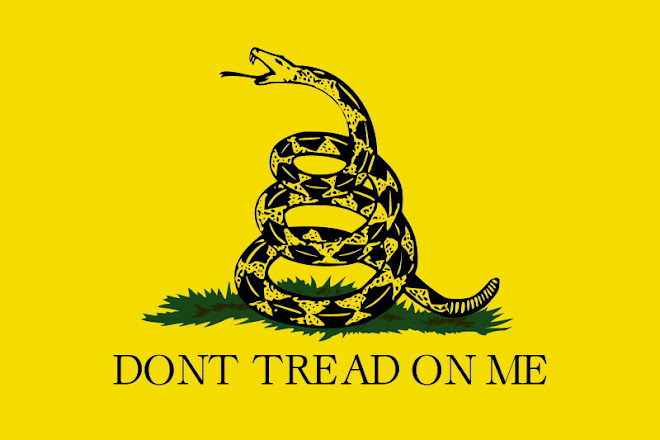
The 1770's flag has made a huge comeback, and for good reason...
"Here's to hoping this isn't your kids' teacher"


Obama's New Bill of Rights

"he even writes lefty"
Obama Marketing team is hard at it!

Another great campaign slogan: "Transparency!"
New campaign slogan for the Obummer juggernaut

Those marketing folks are working overtime over there...
Let's drive a little more carefully this time, OK?

Please stay in the right lane...

Don't let the Takers defeat the Makers: Defeat Obummer in 2012

I'm kinda diggin' the new slogan: transparency finally?

Dads Against Daughters Dating Democrats

"available at fine clothiers and wherever English is Spoken"
Ronald Reagan

"Republicans believe every day is the 4th of July, Democrats believe every day is April 15th."
www.thoseshirts.com

Close your eyes...breathe deeply...imagine...
A clause that didn't make the final draft
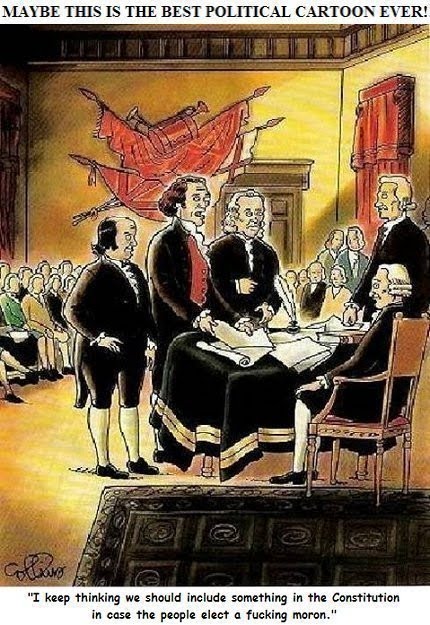
"Thomas, I really think we ought to include this???"
The Bill of Rights
"or what lefties refer to as, those pesky little first 10 amendments that prevent us from stomping on the great unwashed"
I wonder what he's thinking now???
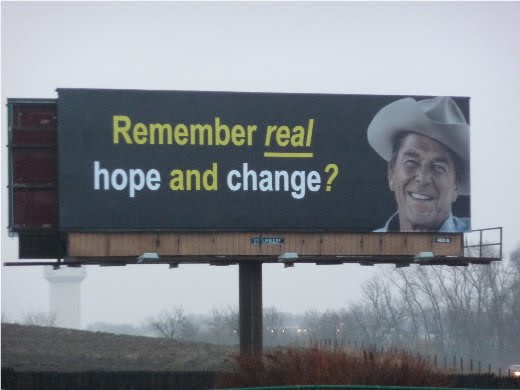
Ronaldus Magnus, on a billboard in the Twin Cities