Another very interesting op ed, this one from a lefty in the Urinal. I mean, he didn't actually write it while standing in a urinal, I don't think anyway, but it was published in the Urinal (Sentinel).
Anyway,a dose of sanity in an insane time. I hope he has good insurance, cuz he's probably about to be "Occupied..."
------------------------------------------------------
By Richard Foster
Feb. 4, 2012
Election 2012
I sometimes think I am the only liberal Democrat in Wisconsin who opposes the recall of Gov. Scott Walker. It is not that I endorse the policies Walker and his legislative allies have adopted. Far from it. Walker's campaign to destroy public-sector unions is particularly despicable. But those policies, horrendous as they are, do not justify removing him from office before his term expires.
I thought it was generally agreed that removing an elected official - a governor, a president, a mayor, whatever - before his or her scheduled re-election is an extraordinarily rare and grave step. You don't remove an officeholder before an election simply because you disagree with his or her official acts.
Instead, you do it, if at all, only in response to gross personal or professional misconduct, what the Constitution calls "treason, bribery or other high crimes and misdemeanors." These questions were exhaustively debated prior to the impeachment of President Bill Clinton in 1998.
At that time, congressional Republicans and others argued that Clinton should be removed from office because he committed crimes against the state, namely, perjury, which is a felony, when he lied to a grand jury concerning his affair with intern Monica Lewinsky and other matters.
Those who, like me, disagreed with the Republicans didn't so much challenge the claim that Clinton committed perjury, since it was pretty obvious that he did. What a lot of us said was that unlawfully covering up a sexual affair, while morally and legally repellent, was not so serious an offense as to justify removing him from office. Clinton, we said, should be censured by Congress, but not impeached.
Now, what have Walker and his Republican supporters in the Wisconsin Legislature done? They have attempted to destroy the public-sector labor union movement in Wisconsin, a movement with a long and lustrous reputation in our state.
The Republicans' claim that they were merely attempting to curb spending and balance the budget was demolished by the fact that they persevered in their demolition campaign even after the unions agreed to make the financial sacrifices Walker demanded of them.
They have put on the books a law requiring would-be voters to display a government-issued photo ID before they may cast a ballot. This putative purpose of the law is to stop voter fraud. But voter fraud In Wisconsin is about as common as snowballs in July. The actual purpose, obvious to anyone who is not a nitwit, is to suppress voting by those who generally vote Democratic.
Republicans have shortchanged public education, weakened environmental protection, given tax breaks to the wealthy and risked the lives and limbs of all of us by making it easier for people to walk around carrying concealed handguns, the chief purpose of which is to kill people.
What they have not done, however, is commit a crime, much less a felony. (There were complaints that Walker's budget-repair bill was enacted in violation of the Open Meetings Act, but that was just window-dressing; Walker's critics would not have dropped their opposition to the bill if it had been passed in strict accordance with the law.)
Everything Walker and his allies have done was done according to the book. They did what they did because they had the votes in the Legislature. In a democracy, that is how things are supposed to be done.
The proper response to bad policy is to vote the policy-makers out of office when their terms expire. The voters installed Walker; he deserves a four-year term to build a record we can judge. If the damage he has inflicted on the state is as serious as his critics say, it will not be difficult for a challenger to point them out and offer remedies. Once again, this is how things are done in a democracy.
There is another and perhaps more cynical reason to oppose a recall election. What happens if Walker wins? If that happens - and it could - he will claim, with some plausibility, that he has been vindicated. He will emerge even stronger than he is now, and he likely will proceed to seek enactment of even more harmful legislation.
If, on the other hand, Walker loses a recall election, a dangerous precedent will be set. Along with many other people, I have long bemoaned the fact that our political system makes it very difficult to enact swift, far-reaching changes.
Instead, we have to settle for small steps, incremental improvements. Most of the time, snail's pace advancement is merely frustrating. But there are times when drastic action - revolutionary reform - is needed, or at least desirable.
If Walker is recalled, any Democratic successor will think long and hard before championing, say, major improvements in mass transit, strong measures to protect the environment or tax increases of any kind, at any time, for anyone, for any purpose. Leadership will be more difficult, political cowardice more commonplace.
Also, a recall election will present people who are opposed both to recall and to Walker's policies with an impossible choice. A vote to remove Walker would signal an endorsement of the misconceived recall process. But a vote to retain him would signal support for his abysmal policies.
Writing in the name of a candidate is an option. But a vote for a write-in candidate is also an endorsement of recall. Voters can always stay at home on election day, except that voting is a civic responsibility. My guess is that, at the end, I will vote to recall Walker, but this will be an emotional decision, not a rational one.
Unfortunately, a requisite number of signatures has been submitted, and a recall election appears inevitable. The stage for this political melodrama has been set. Depending on your preferences, Walker will be either the guy on the white horse or the guy wearing the black hat. Either way, the performance will not have a happy ending.
Richard Foster of Whitefish Bay is a former member of the Journal Sentinel Editorial Board.
Follow us on Twitter @Gadsden_Group

And tell your friends too!!!
If you understand Alinsky, you understand Leftists

Obama was an Alinsky trainer at ACORN
About Us
- Wisconsin Republican Dad
- WRD: I'm just a dad and husband who's very worried about the direction this country is going, and decided it was time I got involved. I believe in fiscal restraint, personal responsibility, a much smaller goverment, fewer government programs, agencies, and entitlements, strong national defense, and justice for criminals. I want our borders strengthened, tort reform, a balanced budget, and deficit reduction. I believe in Constructionist judges, not liberals who legislate from the bench. I'm pro gun, I'm for expanding nuclear power and offshore drilling. By default, that makes me a conservative Republican. The liberals are killing this country, and worse, they know it. Their desire to be liked, to be seen as champions of the poor, while they continue to grow the welfare state, bothers me greatly. Because arrogance is the worst of human traits, their condescension (that means you Russ Feingold) towards middle America makes me want to scream. So I am... Gadsden Group: We are a group of like-minded individuals based in Waukesha and Milwaukee counties (WI). We're sick of liberals running our state into the ground, so we decided to make a stand. So far, so good...
Very, very true...

Liberal tears....

"I also am a total loser"
We won! Again!!!

3 victories in 4 year, this is uncharted water. Take that you lefties!!!!
This says it all perfectly

wish I had thought of this one!
Leftists...

Differences

Please, can you help us find a cure?

Send your donation to the Trotsky/Alinsky Center for the Insane
The official definition of liberal

Obama's Desktop

Thanks NSA!
Sounds about right...

Sounds about Right

Please, no more desecration of the White House from these Hippies

Yuck!
Perhaps the best t-shirt evah!

2A

Here's one man who can save our counrty

That liberal lion, John F. Kennedy

Welcome to Wisconsin

The sick freak polymath22 posted this fake image of murdered Martin Richard

One of the worst things I've ever seen on social media, and that's saying something. Disgusting.
TRAITORS! TREASON!!!

What's the penalty for treason again?

What we're up against, #5,678,890


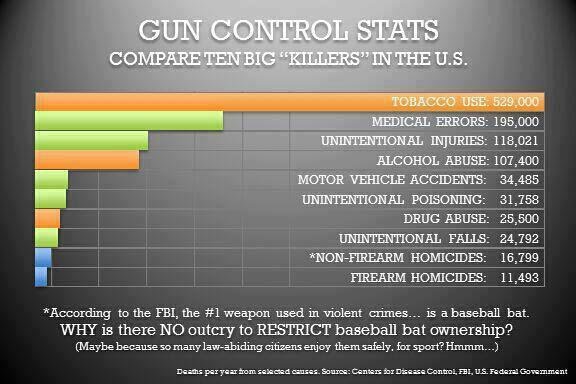
Our Idiot in Chief using his Prompter

"I go skeetshooting all the time" LOL
"What Difference Does it Make?"


And it begins...God Help us

Watching Americans die in Benghazi, and not assisting, leads to:

What have we done...

Oct. 25th, 2012 cover, New York Post

Benghazi-Gate is the end of O's political career whether he wins re-election or not. Let's make it not.
Words spoken were never truer...and he said them!!!

If looks could kill...

"Thanks for ruining our 20th anniversary meanie!"
DEFICIT!

Obamanation

This flag desecrator must be stopped NOW!!!

Dear Leader violates the Flag Code. He should be arrested for putting his image on the flag while being a sitting POTUS. People have died for our Flag. These $35 flags from obama.com are a National disgrace.

Now that's funny!

Try putting this one on your Dane County SUV!!!
The New Obama Slogan

Those guys are working overtime over there
My buddy Al G. from near Detroit took this photo...

What kind of a vile, despicable person drives this car? (A Hyundai in Detroit as well)

Thank goodness we're all computer-savvy!

This Massachusetts billboard gets it right!
The best empty chair photo I've seen so far!

Thank you Clint Eastwood for the Empty Chair!!! Great stuff!
June 28, 2012

The day the people were forced to take back their country
I don't care who you are, that's funny!

The great Paul Ryan

Romney for 8, Ryan for 8, Walker for 8, Rubio for 8. Then we die old & happy.

This is perfect for Andrea Mitchell, since she already is a dog!

June 18, 2012

The Wisconsin Boys welcome the next POTUS to WI, the state that saved a country!
Obamacare

What could possibly get between you and your doctor?
Congratulations to all the 54% ers!

Your kids all thank you!

Got it Leftists? Understand? I didn't think so...


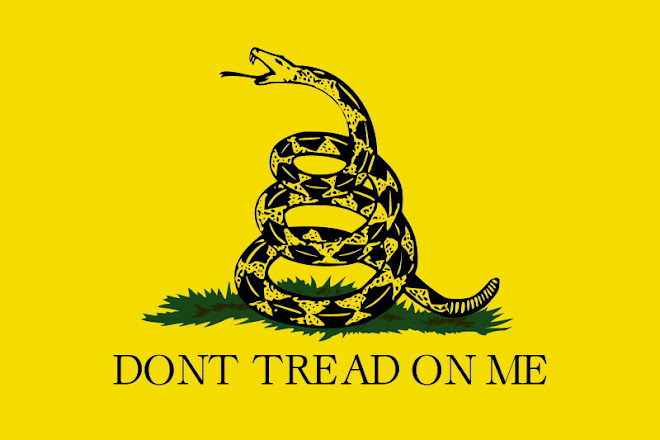
The 1770's flag has made a huge comeback, and for good reason...
"Here's to hoping this isn't your kids' teacher"


Obama's New Bill of Rights

"he even writes lefty"
Obama Marketing team is hard at it!

Another great campaign slogan: "Transparency!"
New campaign slogan for the Obummer juggernaut

Those marketing folks are working overtime over there...
Let's drive a little more carefully this time, OK?

Please stay in the right lane...

Don't let the Takers defeat the Makers: Defeat Obummer in 2012

I'm kinda diggin' the new slogan: transparency finally?

Dads Against Daughters Dating Democrats

"available at fine clothiers and wherever English is Spoken"
Ronald Reagan

"Republicans believe every day is the 4th of July, Democrats believe every day is April 15th."
www.thoseshirts.com

Close your eyes...breathe deeply...imagine...
A clause that didn't make the final draft
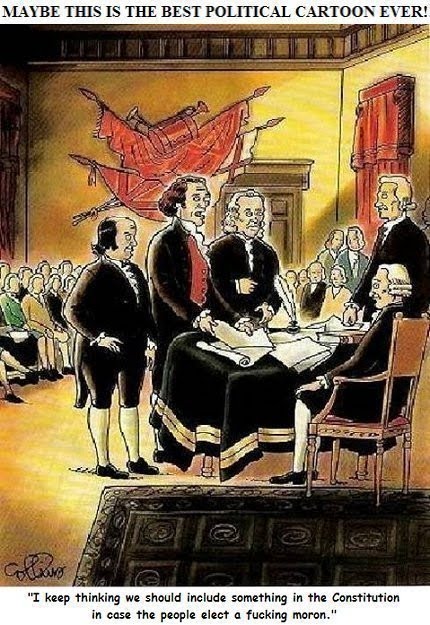
"Thomas, I really think we ought to include this???"
The Bill of Rights
"or what lefties refer to as, those pesky little first 10 amendments that prevent us from stomping on the great unwashed"
I wonder what he's thinking now???
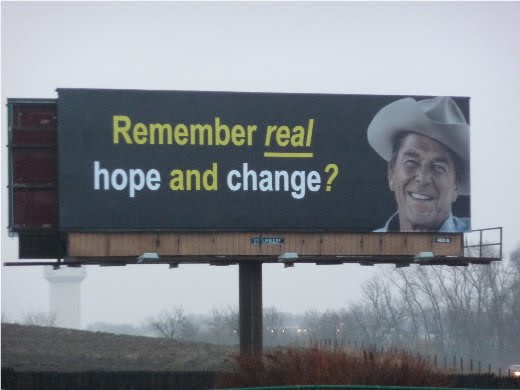
Ronaldus Magnus, on a billboard in the Twin Cities